Is Micro Soldering Worth It for Your Device?
A phone that will not charge, a laptop that will not power on, or an iPad stuck in a boot loop does not always need replacing. The real question is: is micro soldering worth it when a standard repair shop has said the motherboard is faulty? For many Darwin customers, the answer is yes – particularly when the device is otherwise in good condition or holds photos, work files, messages and access to essential accounts.
Micro soldering is a specialist repair, not a quick parts swap. It can restore devices affected by charge faults, water damage, damaged connectors and failed chips. But it is not the right financial choice in every case. A proper diagnosis should tell you what has failed, what can be repaired and whether the result makes sense for your device and budget.
What micro soldering actually fixes
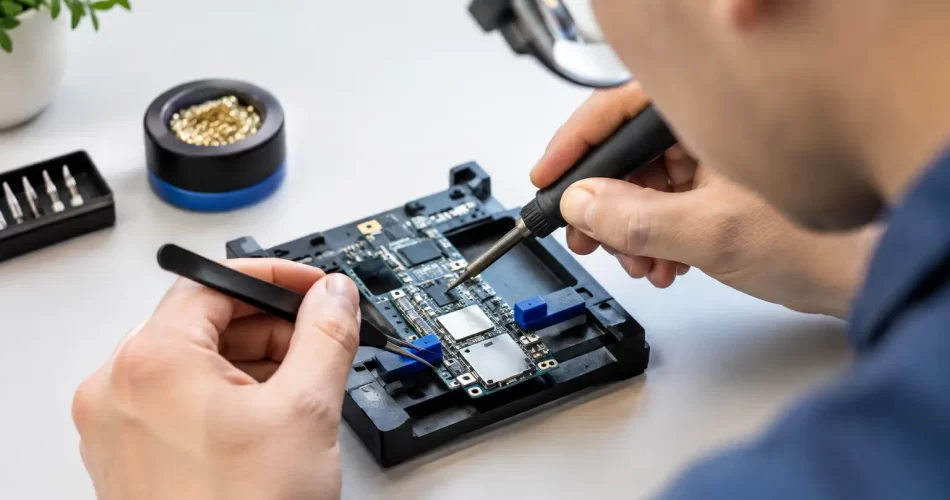
Micro soldering is board-level repair performed under magnification with precision tools. Instead of replacing a screen, battery or charging port assembly, the technician works directly on the logic board or motherboard. This may involve replacing tiny components, rebuilding damaged solder pads, repairing broken traces or replacing an IC chip that controls a key function.
That matters because many faults sit beneath the surface. A new charging port will not fix a phone if the charge-management IC has failed. A new screen will not solve a backlight circuit fault. And a device with water damage may look clean externally while corrosion is quietly spreading across the board.
Common faults that can be suitable for micro soldering include charge IC and USB-C charging faults, HDMI port damage on gaming consoles, audio IC faults, backlight failure, no-touch faults, boot loops, Wi-Fi or Bluetooth faults, damaged display connectors, battery connector damage and liquid-damaged logic boards. On laptops, repairs can include damaged power circuits, failed charging components and faults around USB-C or display connections.
These are technical jobs, and outcomes depend on the exact model, fault history and condition of the board. A skilled diagnosis comes before any promise of repair.
Is micro soldering worth it? Start with the value of the device
The price of a repair is only one part of the decision. Think about what replacement would actually cost you: a new device, setup time, lost files, replacement accessories, interrupted work and the effort of getting every account signed in again.
Micro soldering is often worth considering when your device is a recent or higher-value model. An iPhone, Samsung flagship, iPad Pro, MacBook, gaming console or business laptop may have plenty of useful life left even when its motherboard has a single failed component. Repairing that component can cost far less than replacing the whole device.
It is also worth considering when the data matters. If a phone will not turn on after water damage, board-level repair may be the only practical route to recover locally stored photos, notes, messages or files. A screen replacement cannot retrieve data from a dead logic board. Nor can a factory reset, which may make recovery less likely.
For small businesses, downtime can make the calculation even clearer. A failed work phone or laptop can delay invoices, booking systems, customer communication and access to two-factor authentication. A repair that gets the original device running again can be better value than losing a day or two transferring systems to a replacement.
When replacement may be the smarter choice
Not every device should go to the micro soldering bench. If a device is old, heavily damaged and already needs several major repairs, replacement can be more sensible. For example, a budget phone with a failing board, cracked screen, poor battery health and damaged housing may cost more to restore than it is worth.
The same applies where there is severe corrosion across multiple areas of a board. Water damage is unpredictable. Corrosion can cause one immediate fault and create others later, especially if the device was powered on after getting wet. A technician may be able to revive it, but the most honest recommendation can sometimes be data recovery first, followed by replacement.
Availability matters too. Some chips are paired to the device or difficult to source. Others require specialist programming or carry a higher risk because the surrounding board is badly damaged. Repairability is not just about whether a fault exists. It is about whether the repair can deliver a reliable result at a sensible price.
If you are deciding between repair and replacement, compare the total likely repair cost against the replacement cost of an equivalent device, not just the price of the newest model. Then factor in data, convenience and remaining useful life.
Signs you may need board-level repair
A device does not have to be completely dead to need micro soldering. Some of the most common warning signs look like ordinary faults at first.
Your phone may charge intermittently even after the port has been cleaned or replaced. It may show an Apple logo or Samsung logo, restart repeatedly and never fully boot. The screen may light up but show no image, or touch may stop working after a drop. A laptop may indicate charging but refuse to power on, while a PS5 may have no picture because its HDMI port or related circuitry has been damaged.
Previous repair attempts are another clue. If a device has been opened, pried or had a connector torn from the board, a replacement part alone may not resolve the issue. The connector itself, its solder pads or the tiny components around it may need repair.
Water exposure should always be treated seriously, even if the device appears fine initially. Turn it off where possible, do not charge it and avoid heat-based DIY fixes. Rice does not remove corrosion or repair a short circuit. The sooner the device is assessed, the better the chance of limiting damage.
What affects the cost and success rate?
Board repair pricing varies because faults vary. A damaged connector repair is different from tracing a short circuit across a liquid-damaged board. The diagnosis may require microscope inspection, voltage testing, thermal imaging or component-level measurements before the failed area can be identified.
The model matters. Newer devices are often worth more, but they can also be more tightly integrated. Foldable phones, modern laptops and high-density tablets may require more labour and specialist parts. Previous poor-quality repairs can add complexity when pads have lifted, components are missing or the board has been overheated.
Success also depends on the reason for failure. A single failed IC or torn connector can have a strong repair outlook. Severe water damage, multiple power faults or a physically cracked board is less predictable. A professional repairer should explain this clearly before proceeding, rather than treating every motherboard fault as a guaranteed fix.
At iSmashed, the practical approach is to assess the fault first and recommend the option that makes financial sense. Where a repair is suitable, the aim is to restore the device quickly and professionally, with a clear 3-month parts warranty on applicable work.
Questions to ask before approving micro soldering
You do not need to know the name of every chip on your board. You do need straight answers about the repair. Ask whether the fault has been confirmed, whether data recovery is part of the goal, what the likely turnaround is, and whether there are risks from water damage or previous work.
It is also reasonable to ask what happens if the repair is unsuccessful. Some diagnostics identify a fault quickly; others reveal additional damage only once testing begins. Clear communication matters, especially where your device contains important data or is needed for work.
Be cautious of anyone who offers a fixed board-repair price without assessing the device, or who jumps directly to a screen, battery or port replacement without checking why the fault happened. The cheapest quote is not always the lowest-cost outcome if it leaves the underlying problem untouched.
The practical decision
Micro soldering is worth it when it saves a device that still has real value, protects irreplaceable data or avoids the expense and disruption of replacement. It is less worthwhile when the device has reached the end of its usable life or has widespread damage that makes a reliable repair unlikely.
The best next step is simple: get the device diagnosed before writing it off. A precise fault report gives you a real choice – repair it, recover the data, or replace it with confidence rather than guesswork.